
Full Story
Pamukkale: Turkey's Cotton Castle That Shouldn't Exist
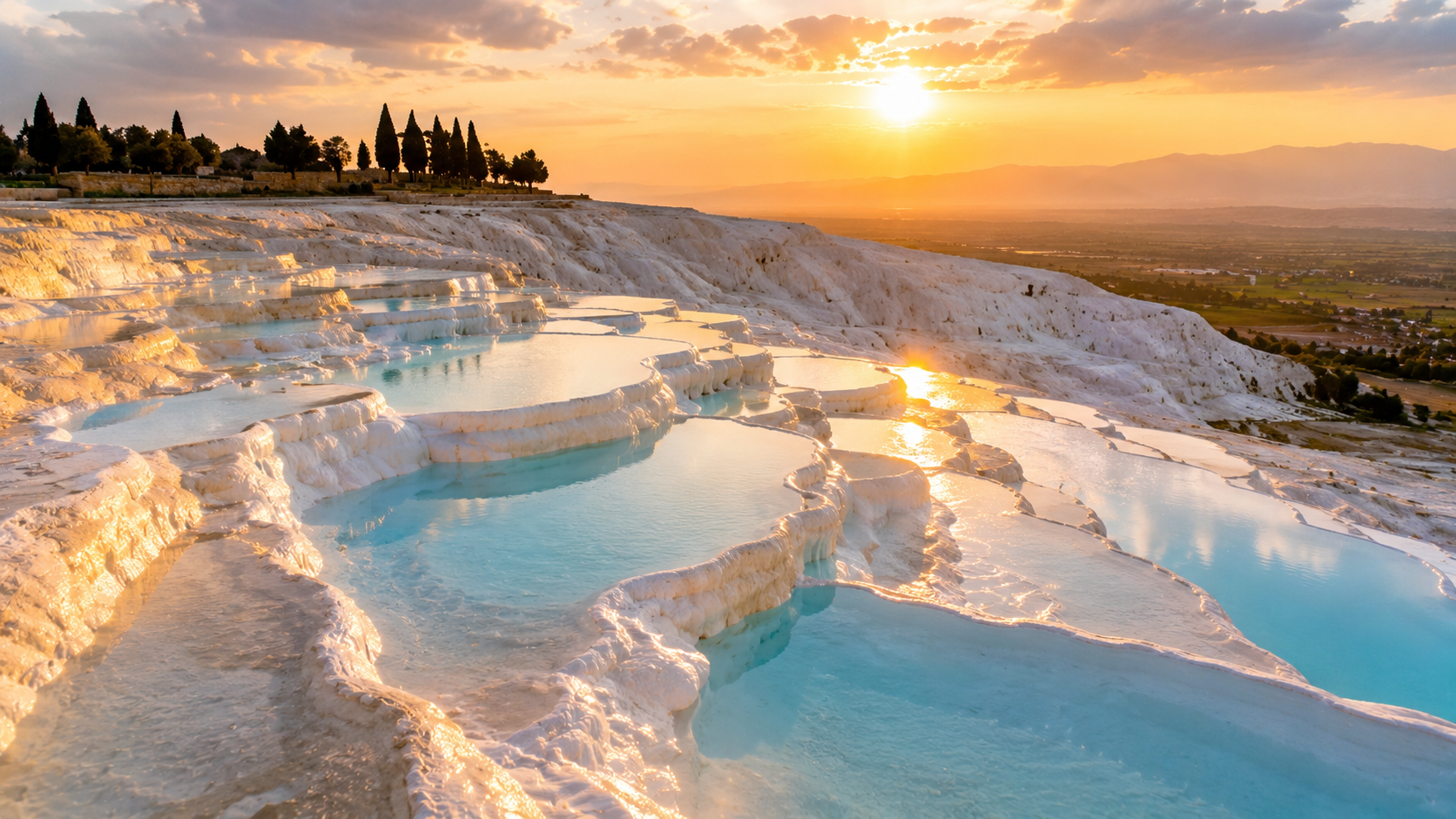
At first glance, Pamukkale looks like a mountain covered in fresh snow.
But the white surface isn't snow or ice.
It's solid limestone created by thousands of years of flowing mineral-rich water.
What Is Pamukkale?
Pamukkale is located in Denizli Province in southwestern Turkey.
Its famous white terraces, called travertines, were formed as warm underground springs carried calcium-rich water to the surface.
As the water cooled, calcium carbonate was deposited layer upon layer, slowly creating dazzling white pools and terraces.
Nature's Infinity Pools
Today, dozens of shallow turquoise pools cascade down the hillside.
Warm thermal water continuously flows through them, giving visitors the feeling of walking through a giant natural spa.
The striking contrast between the brilliant white rock and crystal-clear blue water makes Pamukkale one of the most photographed places in the world.
A Spa for Ancient Civilizations
People have been visiting Pamukkale for over two thousand years.
At the top of the terraces sits the ancient Greco-Roman city of Hierapolis, where wealthy Romans came to bathe in the mineral-rich waters, believing they had healing properties.
Many of those ancient ruins still stand today.
Protected for Future Generations
Because tourism once damaged portions of the delicate terraces, conservation efforts now carefully manage visitor access.
Guests remove their shoes before walking across certain sections to help preserve the natural formations.
These efforts have helped maintain one of Earth's most spectacular natural wonders.
A UNESCO World Heritage Site
Pamukkale and Hierapolis were jointly designated as a UNESCO World Heritage Site in 1988.
Together they combine breathtaking natural beauty with thousands of years of human history.
A Place That Looks Like Another Planet
Whether viewed from the ground or from above, Pamukkale appears almost too beautiful to be real.
Yet this incredible landscape continues to remind us that nature is capable of creating masterpieces beyond imagination.