
Full Story
Mount Roraima: The Lost World That Shouldn't Exist
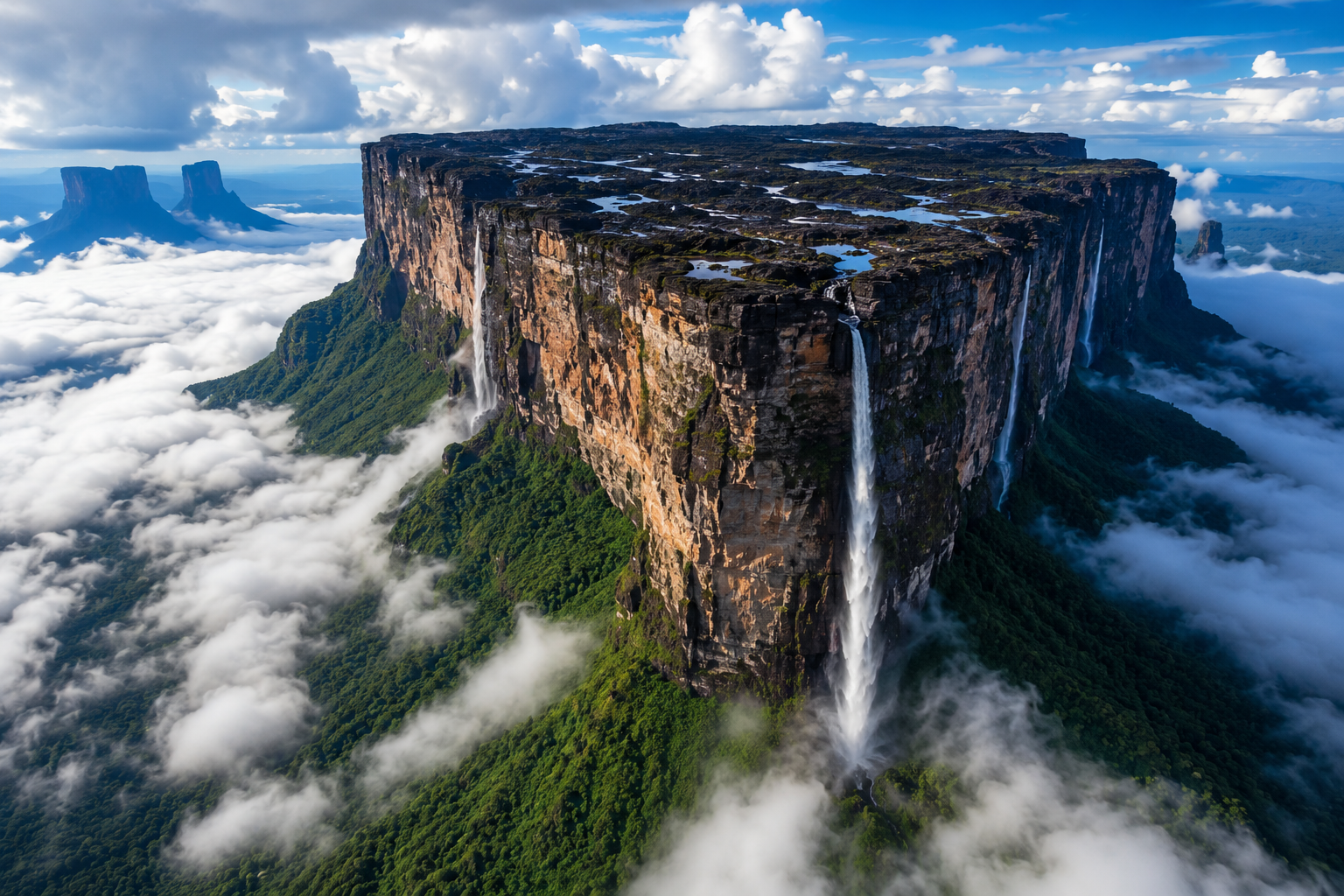
At first glance, Mount Roraima doesn't even look real.
Its towering vertical cliffs rise nearly 400 meters (1,300 feet) straight into the sky, supporting a perfectly flat summit that often disappears into the clouds.
It resembles a giant stone fortress built by nature itself.
One of Earth's Oldest Mountains
Mount Roraima is part of a group of ancient tabletop mountains called tepuis.
These formations date back nearly two billion years, making them among the oldest exposed rocks on Earth.
Long before dinosaurs existed, these mountains already dominated the landscape.
An Island Above the Clouds
Because the summit has remained isolated for millions of years, scientists describe it as a "sky island."
Many plants and animals evolved independently, resulting in species found nowhere else on Earth.
Carnivorous pitcher plants, rare orchids, unique frogs, and unusual insects thrive in this isolated ecosystem.
A Mountain Shared by Three Countries
Mount Roraima sits at the point where Venezuela, Brazil, and Guyana meet.
Most visitors hike from the Venezuelan side, climbing through rainforests before reaching the dramatic plateau.
The Inspiration for *The Lost World*
In 1912, author Sir Arthur Conan Doyle used Mount Roraima as the inspiration for his adventure novel *The Lost World*, imagining dinosaurs and prehistoric creatures surviving on its isolated summit.
Even today, standing on the plateau feels like stepping into another time.
A Landscape Unlike Anywhere Else
The summit is covered with black rock formations sculpted by wind and rain, crystal-clear pools, waterfalls, and strange vegetation.
Frequent clouds rolling across the plateau create an almost mythical atmosphere.
Nature's Fortress
Mount Roraima reminds us that some of Earth's greatest wonders are hidden in plain sight.
Its ancient cliffs, isolated ecosystem, and breathtaking scenery make it one of the closest places on Earth to a real-life fantasy world.