
Full Story
Lake Natron: Tanzania's Blood-Red Lake That Turns Animals to Stone
Few places on Earth look more surreal than Lake Natron.
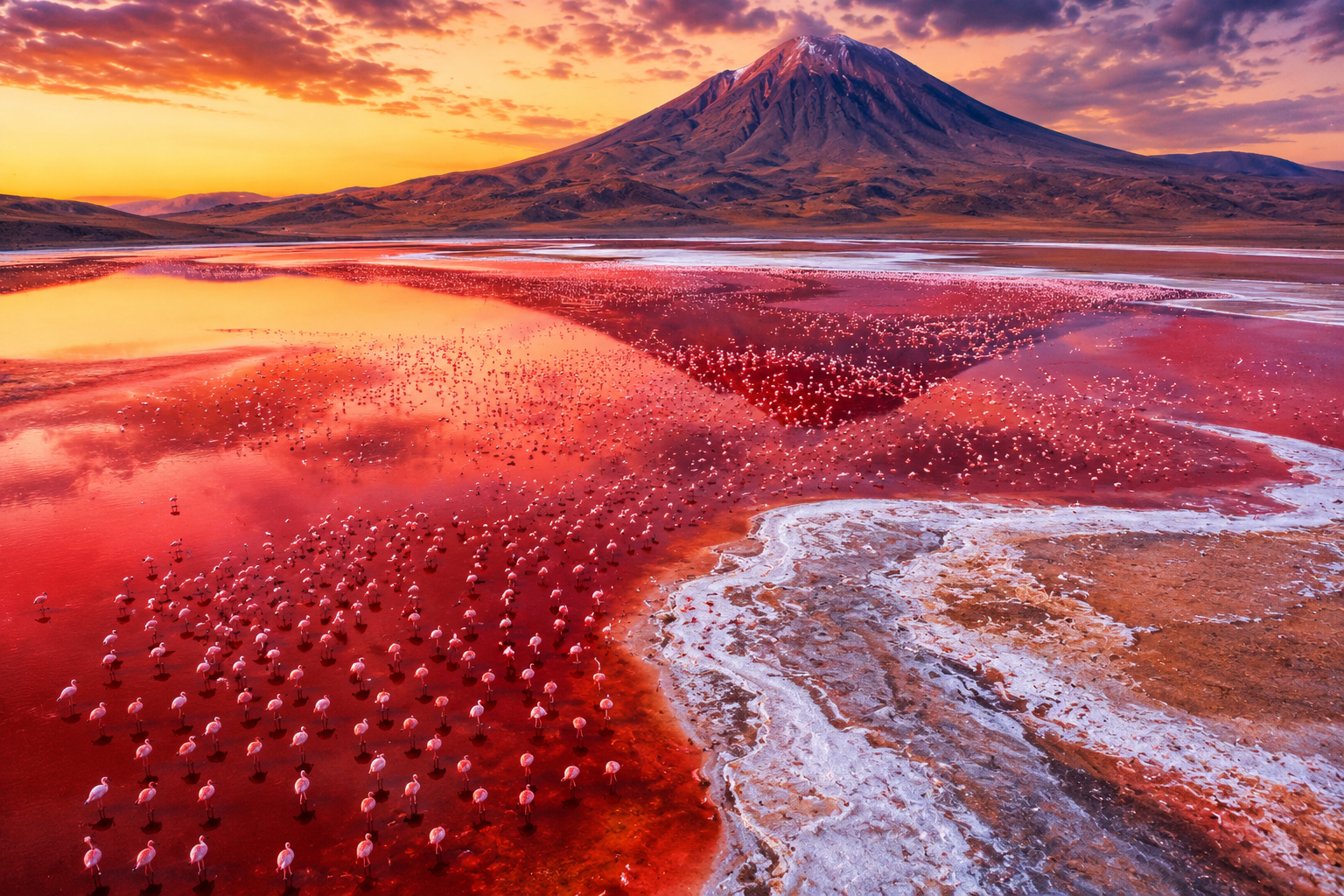
Its deep red waters stretch across northern Tanzania, creating a landscape that resembles another planet.
But its appearance is only part of the mystery.
Why Is the Lake Red?
Lake Natron gets its unusual colors from salt-loving microorganisms and algae that thrive in its extremely alkaline water.
Depending on the season, the lake can appear bright red, orange, or pink, creating breathtaking aerial views.
A Lake With Extreme Chemistry
The lake's water has a pH of up to 10.5, making it nearly as alkaline as household ammonia.
Temperatures can exceed 60°C (140°F) in shallow areas.
These harsh conditions make it difficult for most animals to survive.
Does It Really Turn Animals to Stone?
One of the lake's most famous myths is that it instantly turns animals into stone.
That's not exactly true.
Birds and small animals that die after landing in the lake can become naturally preserved because of the water's high concentration of sodium carbonate and other minerals.
As the bodies dry, mineral deposits coat them, creating eerie, statue-like remains.
The process is preservation—not petrification.
A Paradise for Flamingos
Despite its harsh conditions, Lake Natron is vital to wildlife.
Around 75% of the world's lesser flamingos breed here because the extreme water chemistry keeps predators away from their nesting sites.
Millions of flamingos gather around the lake during breeding season.
One of Earth's Most Unique Ecosystems
The lake sits beneath the active volcano Ol Doinyo Lengai, the only volcano on Earth that erupts rare carbonatite lava.
Together, the volcano and lake create one of Africa's most unusual geological landscapes.
A Place That Defies Belief
A blood-red lake that preserves animals, supports millions of flamingos, and lies beneath one of the world's strangest volcanoes sounds like science fiction.
Yet Lake Natron is completely real—a reminder that nature often creates places more unbelievable than imagination itself.