
Full Story
The Boomerang Nebula: The Coldest Place Ever Found
When people think about space, they imagine freezing temperatures.
But astronomers have discovered a place that takes cold to an entirely new level.
The Boomerang Nebula is so cold that it is actually colder than the faint glow left behind by the Big Bang itself.
What Is the Boomerang Nebula?
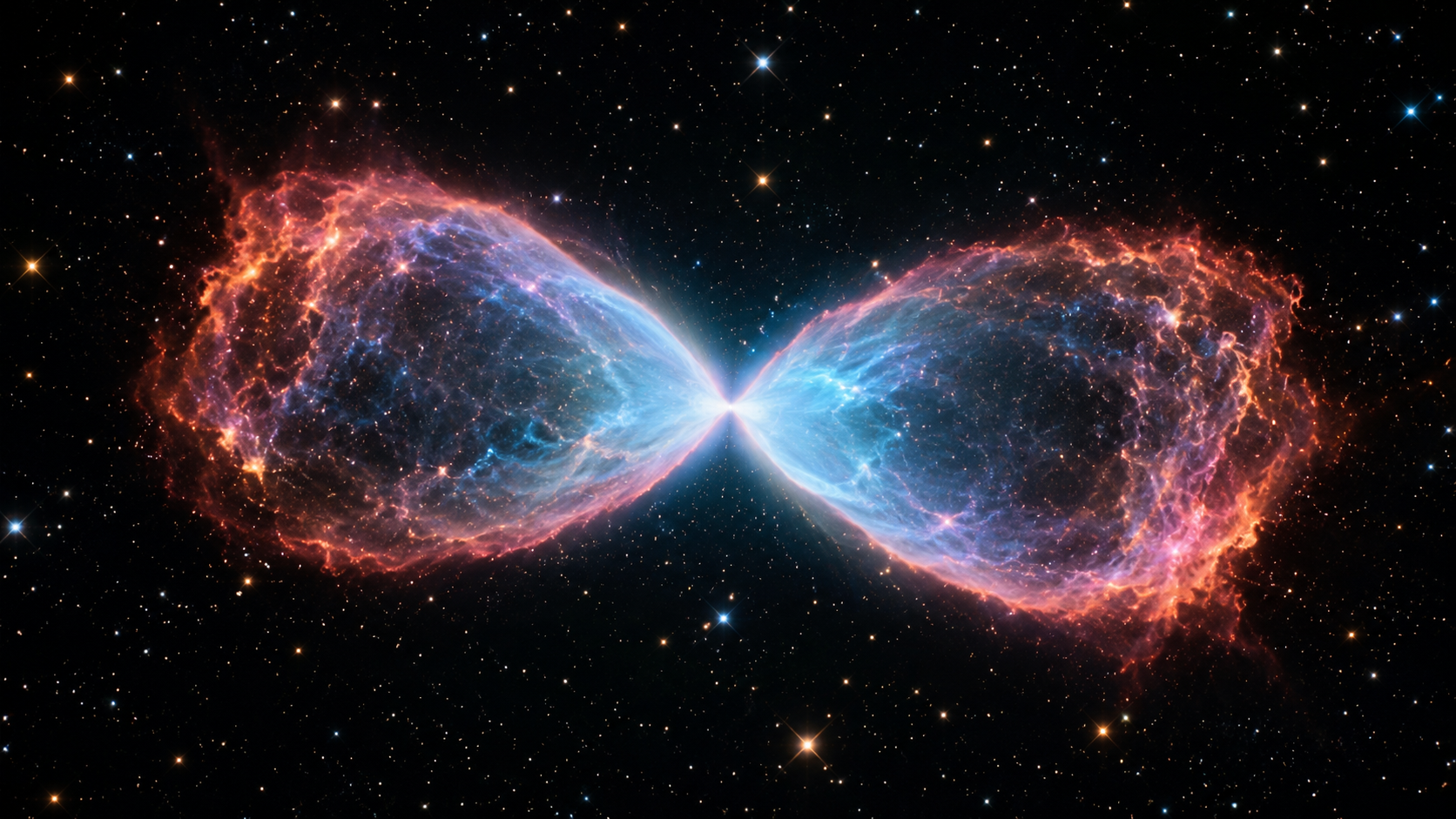
The Boomerang Nebula is a young planetary nebula located roughly 5,000 light-years from Earth in the constellation Centaurus.
It formed when a dying star expelled enormous amounts of gas into space, creating a vast cloud that resembles a bow tie or boomerang when viewed by powerful telescopes.
Colder Than Space
The average temperature of outer space is about 2.7 Kelvin, thanks to the cosmic microwave background radiation left over from the Big Bang.
The Boomerang Nebula, however, reaches temperatures near 1 Kelvin, or about −272.15°C (−457.87°F).
That makes it the coldest naturally occurring place ever discovered.
How Did It Become So Cold?
Scientists believe the nebula's central star is ejecting gas at extremely high speeds.
As the gas rapidly expands, it cools dramatically—a process similar to how aerosol cans become cold when sprayed.
This expansion causes temperatures to drop below those of surrounding space.
A Cosmic Oddity
The Boomerang Nebula was first observed in 1980 and later studied in greater detail using the Hubble Space Telescope and the Atacama Large Millimeter/submillimeter Array (ALMA).
Images revealed intricate structures and provided clues about the dramatic events occurring around the dying star.
Even Colder Places Exist on Earth—Temporarily
Although the Boomerang Nebula is the coldest known natural location, scientists have created temperatures even closer to absolute zero in laboratory experiments.
These extreme conditions allow researchers to study quantum physics and unusual states of matter.
A Reminder of How Strange the Universe Can Be
From black holes to exploding stars, the cosmos is full of surprises.
But few discoveries are as mind-bending as a cloud of gas so cold that it out-freezes space itself.