
Full Story
5 Things That Sound Fake But Are Actually Real
Some facts seem so ridiculous that they must be fake—but science says otherwise.
Here are five unbelievable truths that will make you look at the world differently.
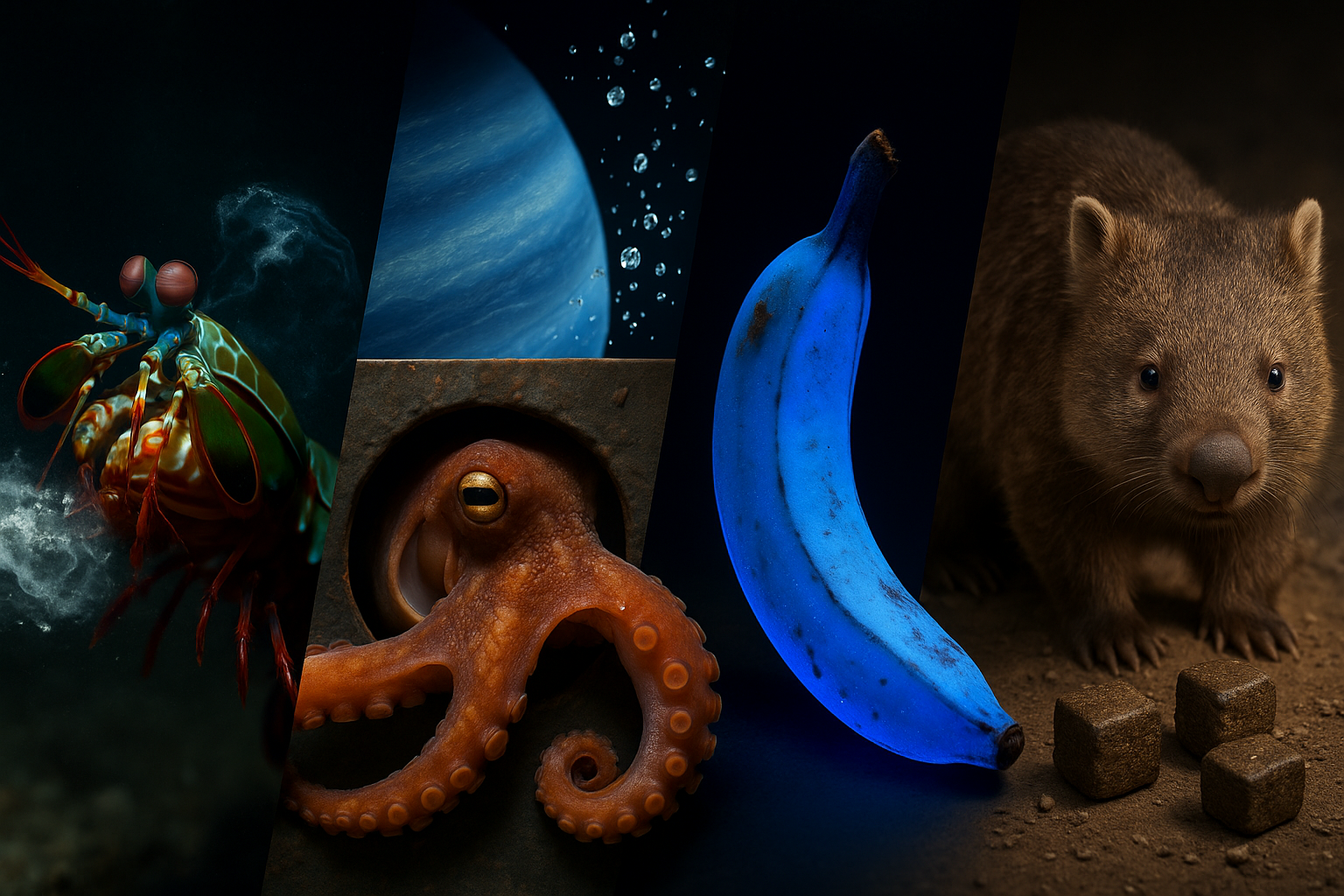
1. Mantis Shrimp Create Underwater Explosions
The mantis shrimp delivers one of the fastest punches in the animal kingdom.
Its club-like appendages move so quickly that they create tiny vapor bubbles in the water. When those bubbles collapse, they generate shockwaves, flashes of light, and temperatures approaching the surface of the sun for an instant.
The impact is powerful enough to crack shells and even damage aquarium glass.
2. It May Rain Diamonds on Neptune and Saturn
Scientists believe the intense pressure deep inside Neptune and Saturn can compress carbon into solid diamonds.
These diamonds may slowly fall through the planets' atmospheres like sparkling rain before sinking toward their interiors.
Although nobody has directly witnessed this phenomenon, laboratory experiments support the possibility.
3. Octopuses Can Squeeze Through Tiny Spaces
An octopus has no rigid skeleton.
As long as its hard beak fits through an opening, the rest of its soft body can follow, allowing it to escape aquariums, hunt in narrow crevices, and surprise almost anyone watching.
4. Bananas Glow Blue Under UV Light
To human eyes, bananas appear yellow.
Under ultraviolet light, however, compounds in ripe banana peels produce a bright blue fluorescence that scientists believe may signal ripeness or result from the fruit's natural breakdown process.
It's a hidden feature that most people never get to see.
5. Wombats Poop Cubes
Wombats are the only known animals that regularly produce cube-shaped droppings.
Researchers discovered that varying elasticity within their intestines shapes the poop into cubes, preventing it from rolling away and helping wombats mark their territory more effectively.
Reality Is Stranger Than Fiction
Whether it's exploding shrimp, glowing bananas, or diamond rain, these incredible facts remind us that the universe is filled with surprises waiting to be discovered.