
Full Story
The Curse of Ötzi the Iceman: Fact or Coincidence?
In 1991, two hikers exploring the Ötztal Alps on the border of Austria and Italy made an extraordinary discovery.
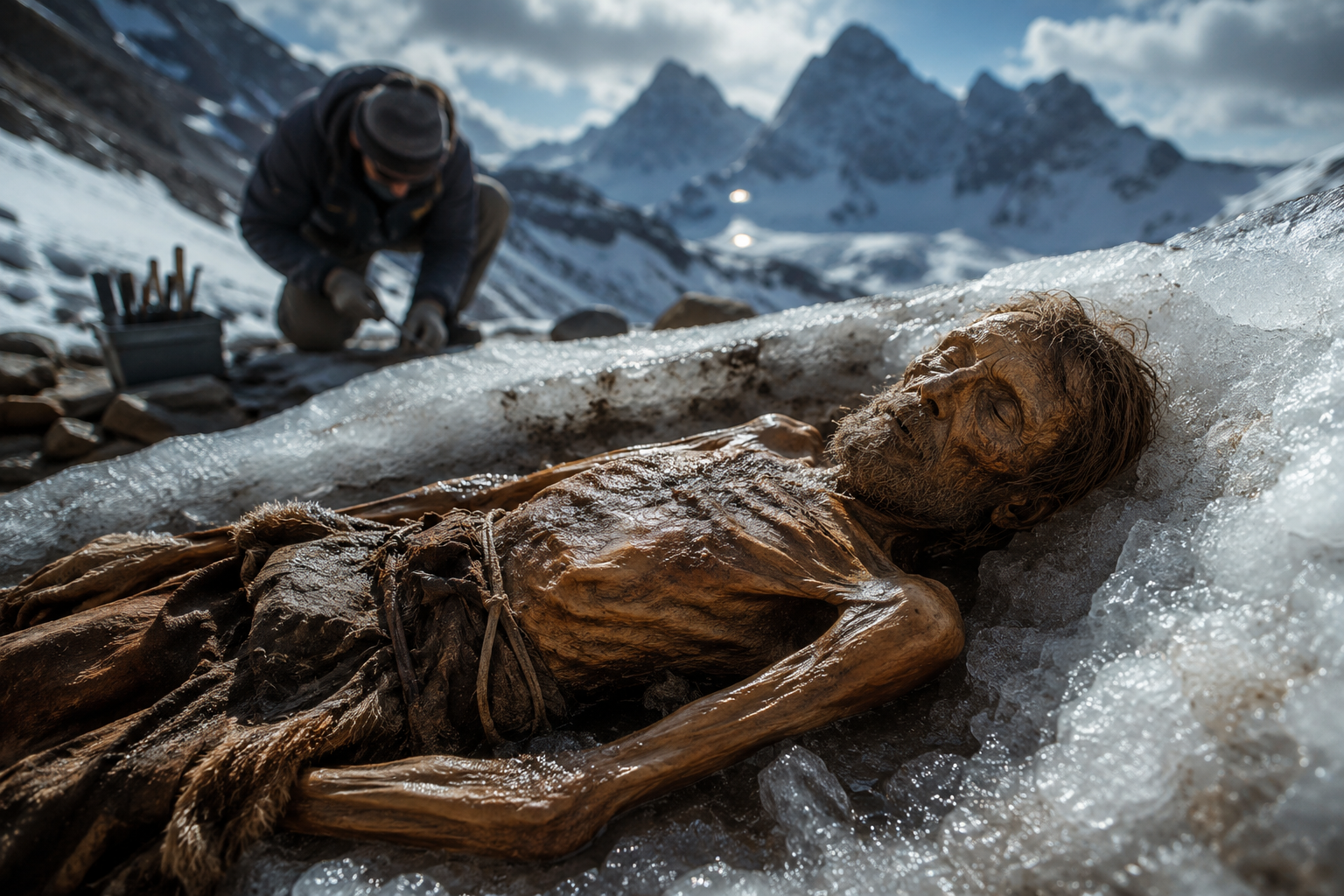
Frozen in the ice was the remarkably preserved body of a man who had died more than 5,000 years earlier.
He became known as Ötzi the Iceman.
One of History's Greatest Discoveries
Scientists quickly realized this was one of the oldest and best-preserved human mummies ever found.
Because his clothing, tools, weapons, and even the contents of his stomach survived, Ötzi provided an unprecedented glimpse into life during the Copper Age.
Researchers eventually determined he had been killed by an arrow wound before his body became frozen in the mountains.
Then the Rumors Began
Over the following years, several people connected to Ötzi's discovery unexpectedly died.
Among them were:
◎ The forensic expert who examined the body.
◎ A mountain guide involved in transporting Ötzi.
◎ The journalist who documented the recovery.
◎ The original discoverer's rescuer.
As news stories spread, many began referring to these events as "The Curse of Ötzi."
Curse... or Coincidence?
Scientists remain skeptical.
The people involved numbered in the hundreds, making several deaths over many years statistically unsurprising.
Many also worked in high-risk professions such as mountaineering and rescue operations.
No scientific evidence has ever supported the existence of a curse.
A Window Into the Ancient World
Today, Ötzi is carefully preserved in a specialized climate-controlled museum in Bolzano, Italy.
Researchers continue to study his DNA, health, diet, tattoos, and final moments, making him one of the most important archaeological discoveries ever made.
The Mystery Lives On
Whether you believe in ancient curses or not, Ötzi's story continues to captivate millions.
Sometimes...
the greatest mysteries aren't about how someone died...
but why we're still talking about them 5,000 years later.