
Full Story
The Accident That Changed Medicine
Few scientific discoveries have saved as many lives as penicillin.
What's even more remarkable is that it was discovered by accident.
A Forgotten Petri Dish
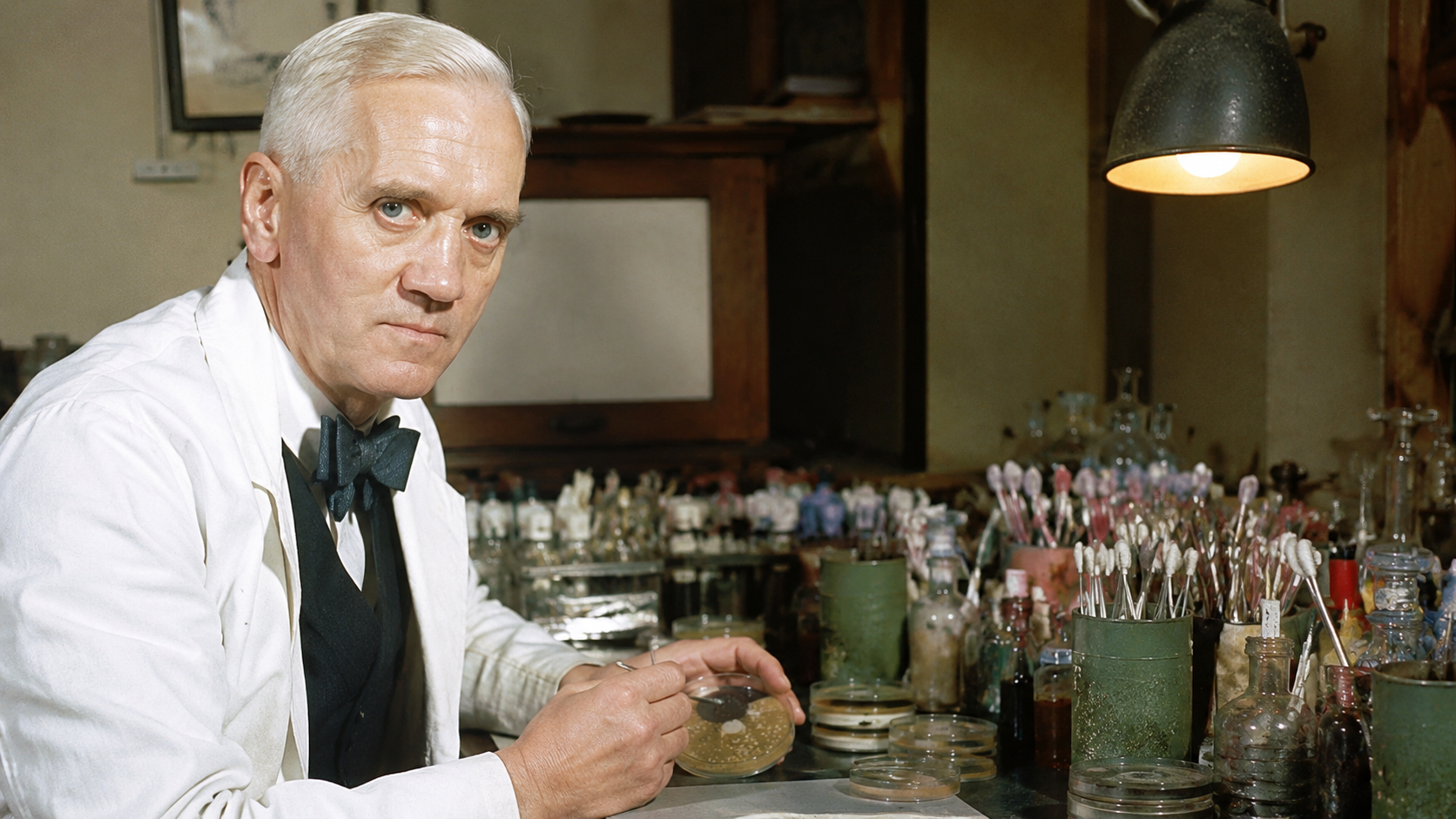
In 1928, Scottish bacteriologist Alexander Fleming was studying staphylococci bacteria at St. Mary's Hospital in London.
After returning from a vacation, he noticed that one of his petri dishes had been contaminated by mold.
Normally, this would have meant throwing the dish away.
But Fleming saw something unusual.
The Mold Was Killing Bacteria
Around the mold, there was a clear area where no bacteria were growing.
The mysterious mold appeared to be releasing a substance that killed the surrounding germs.
Intrigued, Fleming identified the mold as Penicillium notatum and named the antibacterial substance penicillin.
A Medical Revolution
Although Fleming made the discovery, it would take more than a decade before scientists Howard Florey, Ernst Chain, and their colleagues developed penicillin into a practical medicine.
During World War II, penicillin became widely available and dramatically reduced deaths from infections.
Diseases that were once deadly suddenly became treatable.
Millions of Lives Saved
Before antibiotics, simple infections could become fatal.
Penicillin transformed medicine by allowing doctors to successfully treat pneumonia, scarlet fever, syphilis, wound infections, and many other illnesses.
Experts estimate that antibiotics have saved hundreds of millions of lives since their introduction.
A Nobel Prize and a Lasting Legacy
In 1945, Alexander Fleming, Howard Florey, and Ernst Chain shared the Nobel Prize in Physiology or Medicine for their contributions.
Today, penicillin remains one of the most important discoveries in medical history.
The Power of Curiosity
Fleming's discovery teaches an important lesson:
Accidents happen all the time.
But it takes curiosity and careful observation to turn an accident into a world-changing breakthrough.
Sometimes the greatest discoveries are found when we least expect them.